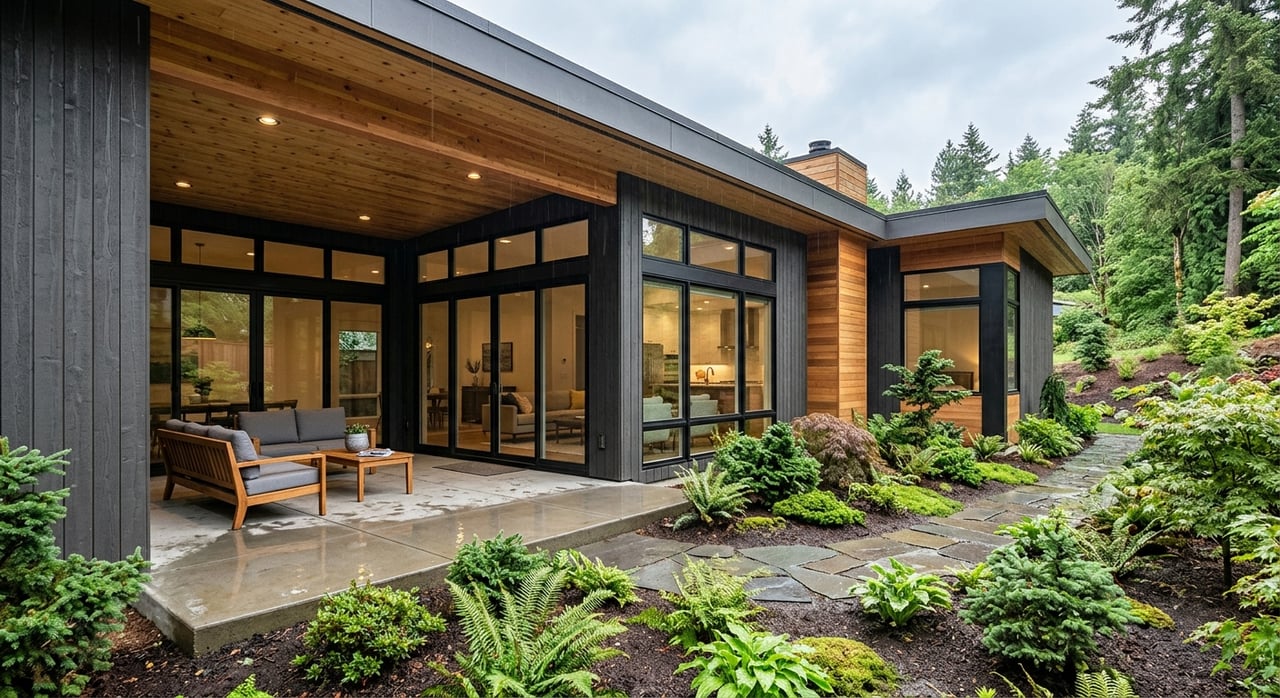
Is your current home starting to feel tight, but moving up in Beaverton also feels expensive? You are not alone. Many households in Beaverton are weighing the same question: stay and adapt, or buy a bigger home. This guide breaks down Beaverton housing trends for growing families so you can better understand inventory, home styles, pricing, and what your next move might look like. Let’s dive in.
Beaverton by the numbers
Beaverton has a housing profile that lines up with the needs of many growing households. According to Census QuickFacts, 20.5% of residents are under 18, the average household size is 2.35 people, and 50.5% of housing units are owner-occupied. That tells you Beaverton has a meaningful base of long-term homeowners and households planning around space needs.
The same Census data shows a median owner-occupied home value of $569,800. Median monthly owner costs with a mortgage are $2,413, and median gross rent is $1,826. For buyers and sellers alike, those numbers help frame the cost of staying in the area versus making a move.
Recent market snapshots suggest Beaverton is active, but not uniformly overheated. Redfin reported in March 2026 that homes sold in about 35 days on average, received 2 offers on average, and had a median sale price of $593,650. Zillow’s April 30, 2026 snapshot showed an average home value of $533,339, about 520 listings for sale, homes going pending in around 13 days, and a median sale-to-list ratio of 0.998.
Because those sources track the market differently, the exact figures do not match. Still, they point in the same direction: Beaverton remains competitive, but not every listing is moving at the same speed.
Detached homes still shape the market
One of the biggest takeaways for growing families is that Beaverton still has a strong detached-home base. The Housing Beaverton Project found that nearly 60% of the city’s housing stock was built in the 1970s through the 1990s, 18% was built before 1970, and 22% has been built since 2000. That means much of the city was built during decades when suburban layouts often prioritized detached homes and practical family floor plans.
The city’s comprehensive plan also notes that existing low- and standard-density neighborhoods are mostly subdivisions from the second half of the 20th century. It further states that nearly all existing housing is single-family detached. For many buyers who want more bedrooms, a yard, or more separation between living spaces, that is an important part of the Beaverton story.
Owner-occupied housing especially reflects that pattern. The Housing Beaverton Project found that 73% of owner-occupied units are detached homes. Rental housing is more spread across different property types, and nearly 63% of rental units are in larger apartment complexes.
In simple terms, if you are looking for the kind of home that often fits a growing household best, much of that supply is still in the detached-home segment. Larger rental options exist, but they are not the core of Beaverton’s housing stock.
What 3-bedroom and 4-bedroom supply looks like
If you are trying to move up in size, inventory matters just as much as price. Current search data suggests there are real options in Beaverton, but not endless ones. Zillow currently shows 246 3-bedroom results and 182 4-bedroom results in Beaverton.
That is enough supply to give you choices, but not so much that you can assume every home will be interchangeable. A limited pool of larger homes means layout, condition, lot use, and location can vary a lot from listing to listing.
It is also worth noting that some larger-home listings appear to be taking longer to sell. The research report notes examples of homes showing 15, 72, and 77 days on Zillow, along with multiple price cuts. That suggests some sellers are still reaching for ambitious pricing, while buyers may have more room to negotiate on the right property.
Prices for more space can jump quickly
For many families, the biggest challenge is not finding a bigger home. It is deciding whether the extra space is worth the added cost. The research report shows that Beaverton 4-bedroom listings include a mix of older homes and new-construction options, with many active listings in the high-$500,000s to $800,000s and some new-construction plans above $620,000.
That price range matters if you already own a 3-bedroom home and are considering a move-up purchase. The jump from a smaller detached home to a larger one can be meaningful, especially once you factor in monthly payments, moving costs, and possible updates after closing.
This is where a practical comparison helps. You are not just comparing a listing price to your current mortgage. You are comparing the value of more space now against the cost of buying into that next phase of homeownership.
Older homes may offer flexibility
Beaverton’s housing stock also creates another path for growing households: improving the home you already have. Because so much of the city’s housing was built in earlier decades, some detached homes may offer layout or lot opportunities that make renovation worth considering.
The research report points to this as a practical first question. Instead of asking only, “Should we move?” many households may benefit from asking, “Can this home be adapted?” In some cases, an addition, a layout rework, or an ADU-style strategy may be more realistic than a full move-up purchase.
That does not mean every home is a perfect renovation candidate. It does mean Beaverton’s older detached-home base gives some households another option before jumping into a bigger purchase.
For a brand like Josh Halemeier’s, this is where construction-informed guidance matters. If you are trying to weigh inspection issues, repair scope, or the real cost of updating an older home, having practical advice can help you compare renovate-versus-relocate with more confidence.
New development is still part of the picture
Beaverton is not a fully built-out market. The city’s long-range housing analysis estimated about 14,987 remaining units of capacity in the study area through 2042. That includes 5,538 units in current residential zones and 1,245 units in mixed-use zones.
For buyers, that points to continued infill and new development over time. In other words, the market is likely to keep evolving rather than staying frozen in its current form. You may see more variety in housing types, lot patterns, and neighborhood development over the next several years.
That said, families looking for more traditional detached-home living may still find that older neighborhoods offer the clearest fit today. Newer development may bring more efficient use of land, but that does not always mean larger lots or more expansive floor plans.
Lot sizes and floor plans are changing
Beaverton’s planning documents show the city is trying to allow more housing variety while staying consistent with neighborhood designations. The comprehensive plan specifically references tools like lot-size averaging to support flexibility. For buyers, that is a clue that future housing options may continue to diversify.
Related city code materials also show how that flexibility can work in practice. Attached dwellings require a 24-foot lot width, while detached dwellings require 40 feet, and the city uses floor-area-ratio standards across several housing types. The research report notes that these standards can help some projects fit more bedrooms and usable space onto smaller or more efficient lots.
The practical takeaway is straightforward. If you want a larger yard or a more traditional suburban layout, older detached neighborhoods may still offer the pattern you prefer. If you are open to newer design tradeoffs, you may find homes that use space more efficiently even on smaller lots.
What this means if you stay put
If your current Beaverton home is mostly working, staying put may deserve a serious look. Older detached homes can sometimes offer enough flexibility for a better layout, more finished living area, or a strategy that helps your home function longer for your household.
This approach can make sense if you like your current area, want to avoid the full cost of moving, or only need targeted improvements rather than a whole new home. It can also help if the inventory that truly fits your needs feels limited or priced higher than expected.
Before committing, it helps to compare renovation cost, likely timeline, and what those updates would realistically do for your day-to-day life. The goal is not to over-improve blindly. The goal is to understand whether your existing home can meet your needs in a cost-effective way.
What this means if you buy bigger
If you know your household needs more space now, Beaverton does offer a real path to moving up. There is active 3-bedroom and 4-bedroom inventory, a meaningful detached-home base, and signs that not every listing is creating a bidding frenzy.
That combination can create opportunity for buyers who are prepared. Some homes still move quickly, and some receive multiple offers, but other listings are sitting longer or taking price cuts. That creates a market where strategy matters.
For move-up buyers, a smart plan usually starts with these questions:
- How much additional space do you truly need?
- Would a different layout solve the problem better than just more square footage?
- How much payment change feels comfortable month to month?
- Are you open to an older home with updates, or do you want newer construction?
- Would a smaller lot be acceptable if the house itself works better?
Those answers help narrow the search and keep you from paying more for features that do not actually improve daily life.
A balanced market calls for a balanced plan
The biggest theme in Beaverton right now is balance. This is not a market where every larger home is impossible to find, and it is not a market full of easy bargains either. Inventory exists, competition exists, and negotiating room may exist too, depending on the property.
That is why growing families often benefit from a side-by-side analysis of their real options. You may find that moving up is the right call. You may find that renovating your current home creates a better return on your budget.
Either way, clear local guidance can make the decision easier. If you want help comparing Beaverton neighborhoods, evaluating a home’s renovation potential, or planning your next move with real market context, Josh Halemeier - Main Site offers a straightforward, consultative approach built around practical local knowledge.
FAQs
Are 3-bedroom homes easy to find in Beaverton?
- Beaverton currently shows 246 3-bedroom results on Zillow, so there are options, but the supply is not unlimited and some listings have been on the market for several weeks.
Are 4-bedroom homes available in Beaverton for growing families?
- Yes. Zillow currently shows 182 4-bedroom results in Beaverton, with a mix of older homes and new-construction options, though prices can rise quickly as you move into this category.
Are larger lots common in Beaverton neighborhoods?
- Beaverton includes older detached-home areas that are more likely to have traditional lot and yard patterns, while newer housing trends often emphasize smaller lots and more efficient footprints.
Is the Beaverton housing market still competitive for buyers?
- Yes, but it is not uniformly intense. Redfin reported homes receiving 2 offers on average and selling in about 35 days, while other listings are showing longer market times and price cuts.
Should growing families renovate or move in Beaverton?
- It depends on your budget, your current home’s layout, and how much additional space you need. Beaverton’s older detached-home stock means some households may have a realistic renovation path, while others may benefit more from buying a larger home.