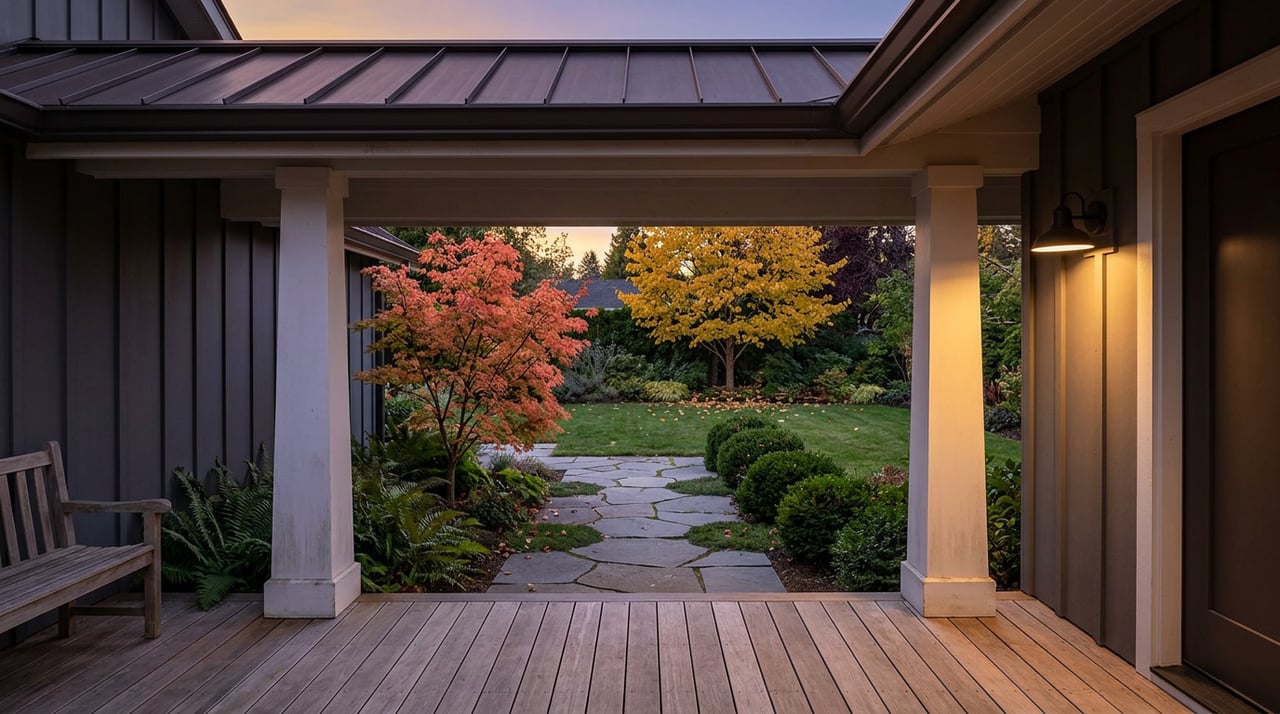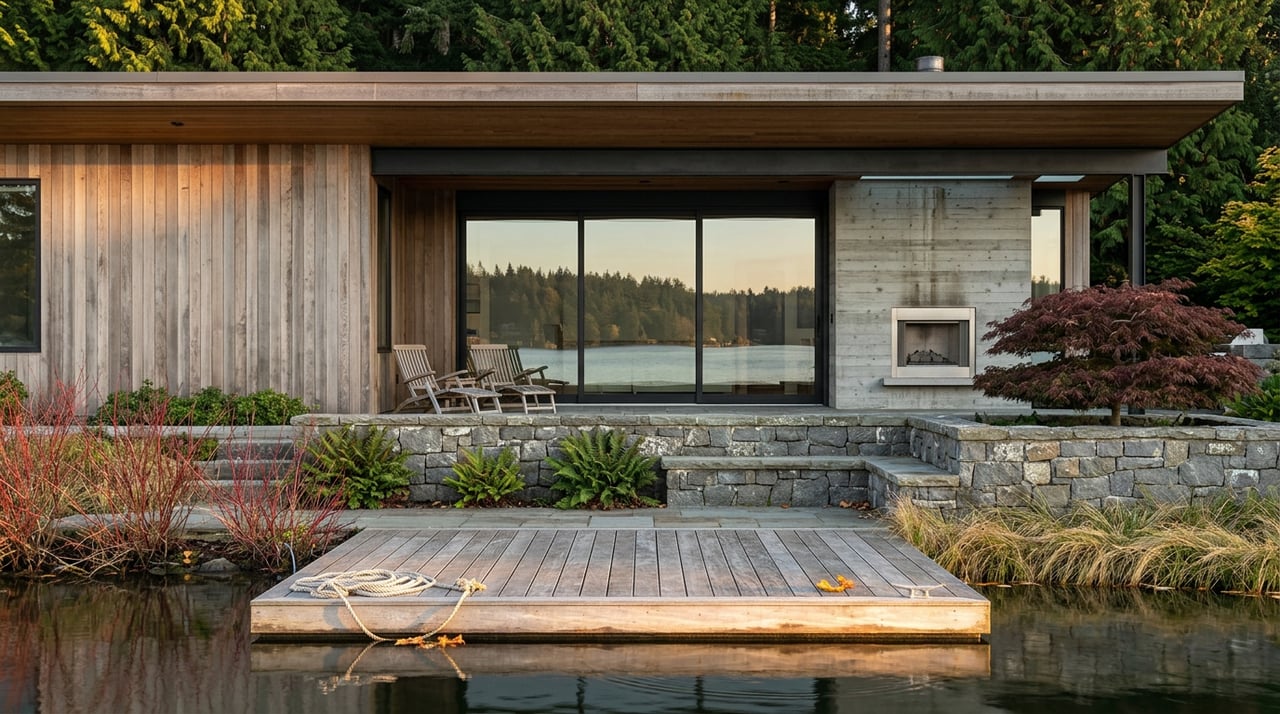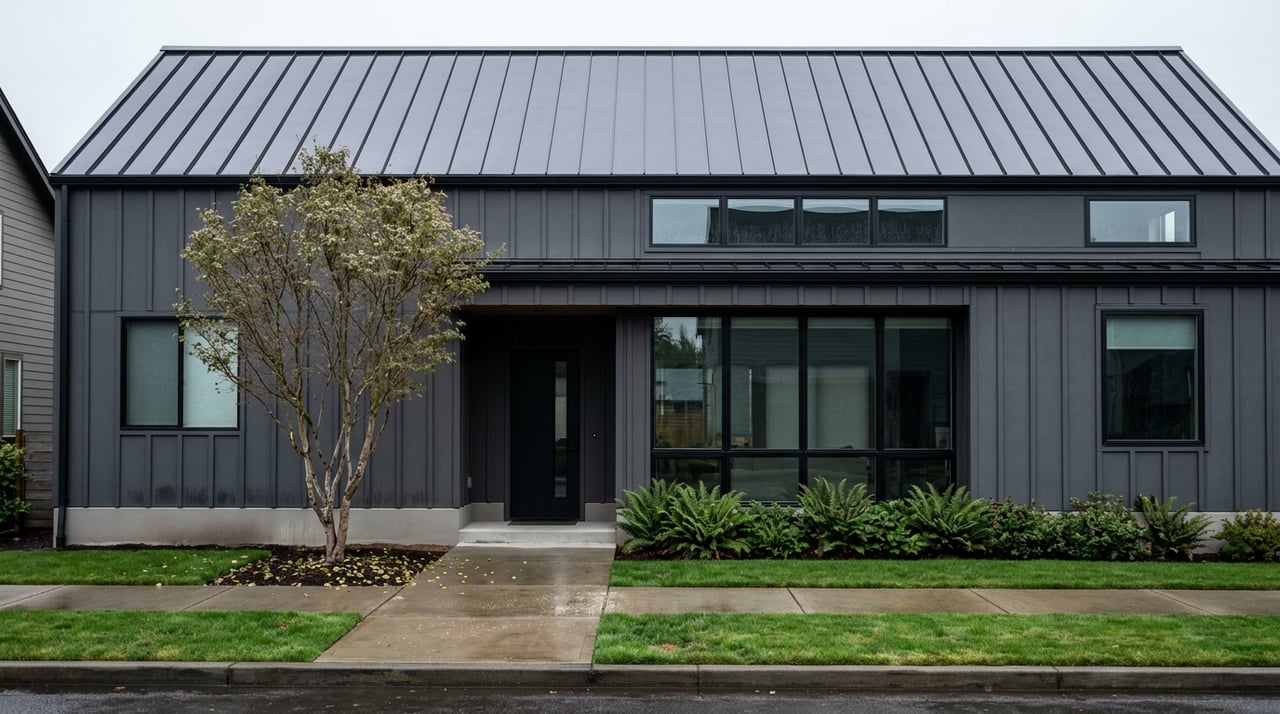
Drive down SW Wapato Island Drive in Sherwood right now and you will pass nine homes under construction, each one with its own name: The Willow, The Cedar, The Maple, and six more. The development is called Brookman Place, and it is priced from the $900s. A few blocks away, in an established Sherwood neighborhood, a resale listing sits at $650,000 with a similar bedroom count and a yard that already has grass in it.
Most buyers assume the math is simple: new construction costs more per square foot because it costs more to build. Land, labor, and finish quality all cost more today than they did five years ago, so a brand-new home should run well above the citywide average on a dollar-per-square-foot basis. That assumption is reasonable. It is also, once you actually run the numbers on Brookman Place, only partly true.
What The Square Footage Actually Says
Brookman Place's nine homes range from roughly 2,300 to just under 2,950 square feet, priced from the $900s. Take the smallest floor plan at that entry price and you land around $391 a square foot. Take The Willow, the largest of the nine at close to 2,947 square feet, and if it sits anywhere near that same starting price point, the math drops to roughly $305 a square foot. The builder has not published unit-by-unit pricing beyond that "$900s" floor, so this is a range built from the public numbers rather than a confirmed price sheet, but it is the honest range the available facts support.
Now compare that to the rest of Sherwood. Over the three months ending April 2026, the median sale price per square foot across all closed sales in Sherwood was $296, based on actual recorded transactions rather than list prices. Movoto's read on active listings as of August 2026 put the per-square-foot figure closer to $325.
Line those numbers up and the picture is not what most people expect. A brand-new, architect-named, single-street enclave is landing somewhere between roughly even with the citywide median and about 30 percent above it, not the 60 or 80 percent premium a lot of buyers assume "new construction" automatically commands. If the entire premium of a $900,000-plus price tag were really about materials and labor, you would expect that per-square-foot gap to be much wider than it is.
So What Are Buyers Actually Paying For
The answer is not the drywall or the countertops. It is the fact that there are nine of these homes and there will never be a tenth.
Brookman Place is built by Verta GC as a single, curated enclave on one street. Once those nine homes sell, that specific inventory type, new construction on Wapato Island Drive, at the edge of Old Town and the edge of wine country, simply does not exist again. A resale buyer three years from now cannot walk into a comparable listing in that same pocket of Sherwood, because the land is gone. That scarcity, not the finish package, is what is actually priced into the sticker.
This matters for how you should be comparing homes right now. If you are cross-shopping a resale listing against something like Brookman Place, the question worth asking is not "why does new construction cost more per foot." It usually does not cost dramatically more per foot in a market like this one. The better question is whether you are willing to pay for a specific, non-repeatable address, or whether an equivalent square footage a few streets over, built ten or fifteen years ago, gets you to the same lifestyle for meaningfully less.
A few specifics worth knowing if you are looking at this particular development:
- The homes range from 4-bedroom layouts with a loft (The Maple) to configurations with 2.1 or 3.1 baths and a 2-car garage, on lots around 0.12 acres.
- The listing copy for individual units explicitly notes that renderings, floor plans, features, and finishes are subject to change, and buyers are encouraged to verify specifics before relying on them.
- Design information for each lot is described as available upon request rather than published outright, which means the exact scope of what "the $900s" buys can still shift lot to lot.
That last point is the kind of detail that catches buyers off guard. If you are comparing a listed price today against a resale comp you saw last month, you are not always comparing two fixed numbers. New construction pricing, especially in a small enclave still under construction, can move as remaining lots sell and finish packages are locked in.
Why Four Different Sites Quote Four Different Sherwood Medians
If you have already spent time searching for Sherwood's home prices online, you have probably noticed the numbers do not agree with each other. That is not because one site is wrong and the others are right. It is because they are answering different questions.
As of August 2026, one portal's listed-price median for Sherwood sat at $670,000, down 5 percent from a year earlier, with homes spending a median of 73 days on the market. That figure reflects what sellers are currently asking, not what buyers are actually paying at closing.
A separate home-value estimate, current as of June 30, 2026, put the average Sherwood home value at $652,532, down 0.2 percent over the year, with homes moving to pending status in around 11 days. That is an algorithmic estimate built from a broader dataset, not a snapshot of recent sales.
Actual closed sales over the three months ending April 2026 came in at a median of $631,000, up 1.8 percent year over year, with homes averaging 29 days on market before going under contract. This is the number closest to what buyers genuinely paid.
And a local buyer's guide published in June 2026 cited a $720,000 median, describing it as having risen more than 14 percent in a single year, with days on market closer to 80. That figure likely reflects a different mix of inventory, since the same guide describes the bulk of buyers landing well-maintained two-story homes with three to four bedrooms at that price point, which suggests it may be weighted toward larger, more established single-family stock rather than the full range of condos, townhomes, and starter homes that pull a citywide median down.
None of these four sources is lying to you. They are each measuring something slightly different: asking price versus closed price, a rolling three-month window versus a single snapshot, an algorithmic estimate versus recorded transactions. If you are trying to figure out whether Brookman Place is a fair deal relative to resale, the number that actually matters is the closed-sales median in the square footage range you are comparing against, not whichever figure loads first on a homepage.
The Question Worth Asking Before You Compare Anything
Having spent years on both sides of renovation and construction work before moving into real estate, the detail I keep coming back to with new construction is this: the premium you are paying rarely lines up neatly with the premium in materials. Sometimes it is location. Sometimes it is the fact that a builder only ever intended to build nine of something. Sometimes, honestly, it is closer to the citywide average than the sticker price makes it look, and the real value is somewhere else entirely.
Before you compare a new-construction listing to a resale one, ask your agent to pull actual closed comps in the same square footage band, over the same recent window, rather than relying on a citywide average pulled from a portal homepage. That is the only way to know whether you are paying for square footage, for scarcity, or for something in between.
FAQ
Is the $900s starting price for Brookman Place the same across all nine homes? No. The nine floor plans range from roughly 2,300 to just under 2,950 square feet, with varying bedroom and bathroom counts, and design specifics are described as available upon request rather than fixed. The "$900s" figure is a starting point for the enclave, not a flat price across every lot.
Does new construction in Sherwood always cost more per square foot than resale? Not necessarily, based on the numbers available right now. Depending on which Brookman Place floor plan you compare, the per-square-foot cost lands somewhere between roughly in line with Sherwood's citywide median and about 30 percent above it, which is a smaller gap than many buyers expect from brand-new construction.
Which Sherwood price figure should I actually trust when comparing homes? Lean on recorded closed sales in the specific square footage range you care about, over a recent window, rather than an asking-price median or a home-value estimate. Those two numbers answer different questions and can lead you to the wrong conclusion if you treat them as the same fact.
If you are trying to work out what a specific Sherwood listing, new or resale, is actually worth relative to what is closing nearby, that is exactly the kind of comparison Josh Halemeier walks through with clients every week. Schedule a free consultation and bring the listings you are comparing. We will run the real math together before you make an offer on either one.