A buyer touring homes near Oswego Lake this fall will run into the same six words on more than one listing sheet: "lake easement rights included." It shows up near the bottom of the description, after the granite counters and the finished basement, formatted like just another amenity. Two houses can carry that exact phrase, sell for close to the same price, and hand their new owners completely different experiences on the water. One family launches a boat by July. Another spends years on a waitlist for a slip that may never open.
The phrase is doing more work than most buyers realize, and almost none of that work shows up in the listing itself.
One Lake, Twenty Separate Contracts
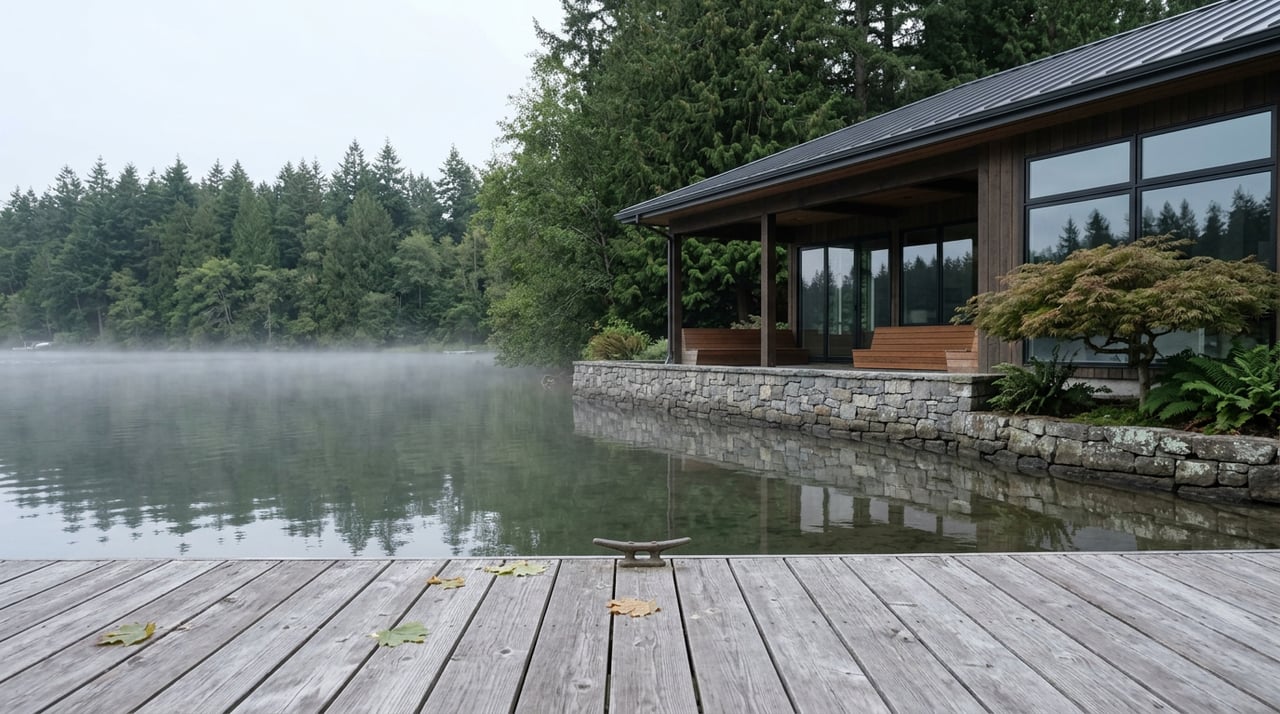
Oswego Lake is privately owned. It has been managed since the early 1900s by the Lake Oswego Corporation, a homeowner-funded entity that traces its authority back to lake access privileges originally granted by the Oregon Iron and Steel Company in recorded property instruments. That history matters because it explains why access to the lake was never built as one public system. It was built as a set of deeded rights attached to specific parcels of land, and it still works that way today.
The Lake Oswego Corporation owns 20 separate lakeside properties around the perimeter of the lake, each one functioning as an easement. More than 3,000 homes in the city carry deeded eligibility for one of these 20 easements. Each easement runs its own volunteer board, sets its own bylaws, and controls its own facilities and fee structure independent of the other 19. There is no citywide standard for what "easement rights" buys you. There are 20 different answers, and a home's listing sheet almost never tells you which one applies.
The Same Words, Wildly Different Realities
Look at two easements side by side and the gap becomes concrete. Blue Heron charges annual dues of roughly $200 and currently has 24 boat slips available. Goodin charges similar dues but carries a powerboat waitlist 44 members deep and a kayak rack waitlist 73 deep. A buyer whose new home ties to Blue Heron can be on the water within the season. A buyer whose home ties to Goodin joins a line that may not move for years, paying the same dues for a fundamentally different privilege.
That variance runs across the full set of 20. Some easements maintain a handful of boat slips and a short line. Others hold none at all and function purely as swim and picnic spots. Initiation fees alone range from roughly $200 at the low end up to $3,500 at easements like Springbrook. Annual dues typically fall between $225 and $1,000 depending on the easement and the type of access a member wants.
On top of whatever the individual easement charges, every member also owes a separate annual registration fee directly to the Lake Oswego Corporation itself. Historically that fee has run somewhere around $200 a year for swim-only or non-powered access, climbing toward roughly $1,500 a year for full powerboat privileges, with a reduced shared rate available for members who split a slip. Those numbers move year to year, so the specific figure attached to any given easement in 2026 is worth confirming directly with that easement's officer rather than assumed from an old fee sheet.
Put plainly: two homes advertising identical language can require the same buyer to pay similar dues for entirely different levels of access, or comparable access for wildly different dues. The listing sheet has no room to explain any of that, and most agents from outside the market do not know to ask.
Why the Recent Court Ruling Doesn't Change This Math
Anyone who has followed the news around Oswego Lake recently might wonder if a widely covered access ruling changed the picture. It did not, at least not for the private easement system. What that ruling opened is a single public entry point at Lower Millennium Plaza Park, available to swimmers and non-motorized watercraft under 18 feet during daylight hours. Motorized boats and jet skis still are not permitted there. The Lake Corporation's shareholders and easement members continue to operate under the same separate system of docks, slips, and fees that existed before the ruling.
A buyer who assumes the case erased the value of a private easement, or made it unnecessary, is working from an outdated read on what actually changed. The public access point is real and it is useful for a resident who wants an afternoon paddle. It is not a substitute for a deeded easement with a boat slip, and it does not touch the fee structure or waitlists described above.
What This Means Against the Current Market
Lake Oswego's headline numbers have moved this year in a way that makes the easement question more relevant, not less. Over the three months ending in August 2026, the median sale price for a home in Lake Oswego sat near $1.0 million, up 11.3 percent from the same period a year earlier, with homes averaging 27 days on market. That is a meaningfully faster, hotter window than the market saw earlier in the year.
A rising median with quicker turnover tells a buyer that competition is real, but it says nothing about which specific easement a competitive listing ties to. In a market where homes are moving in under a month, the temptation is to trust the listing description and move fast. That is exactly the environment where a phrase like "lake easement rights included" gets taken at face value instead of investigated. The pace of the market raises the cost of skipping the one step that actually protects a buyer here.
A Neighborhood Example Worth Knowing
First Addition, one of Lake Oswego's older residential areas laid out originally as a company town in the early 1900s, still carries its walkable grid and craftsman-era character within close reach of downtown. Homes there have listed from the $800s to more than $2 million, and many fall under the Forest Hills easement, which offers roughly 20 boat slips along with storage racks, lockers, and electricity at its lot. That combination of a well-resourced easement and walkable, established housing stock is part of what makes First Addition attractive to buyers who want both lake access and a short walk to downtown. It is also a useful reminder that price alone does not tell a buyer which easement, or how much capacity, comes attached to a given address.
Before You Write an Offer
A home's easement eligibility is checkable before you ever see the property in person. The Lake Oswego Corporation maintains an address lookup on its website that shows which easements, if any, a given property carries rights to, since some homes are eligible for more than one. From there, the real work starts:
- Call the specific easement officer, not just the Lake Corporation office. Ask about current waitlist length for a boat slip or kayak rack, not just whether one exists.
- Ask what the annual dues actually cover and whether the easement has any pending special assessments.
- Confirm the separate Lake Corporation registration fee for the access tier you want, since that number is layered on top of whatever the easement itself charges.
- Treat easement dues the same way you would treat HOA fees or property taxes in your overall cost picture, not as an afterthought.
None of this shows up on a standard listing sheet, and none of it should be assumed based on price or neighborhood reputation. Two homes with the same words on the page can put a buyer in completely different positions six months after closing.
FAQ
Can I add lake easement rights to a home that doesn't already have them? No. These rights are tied to specific deeds through historical property instruments. A home either carries eligibility for one of the 20 easements or it does not, and eligibility cannot be purchased separately or transferred from another property.
Does every home in Lake Oswego have some form of lake access? No. More than 3,000 homes carry deeded eligibility for one of the 20 private easements, but that leaves a meaningful share of the city's housing stock with no lake connection beyond what is publicly available at Millennium Plaza Park.
If I buy a home with easement rights, can I transfer a current owner's boat slip to myself? No. Slip assignments do not transfer with the sale. Once the previous owner's connection to the easement ends, that slip becomes available to the next name on the waitlist, and a new owner takes their place in line like any other applicant.
If you are comparing listings near Oswego Lake and want a straight read on what a specific easement actually offers before you write an offer, Josh Halemeier can walk through the fee structure, waitlist reality, and eligibility for any address you are considering. Schedule a free consultation to get the full picture before you compete for a home on lake access alone.