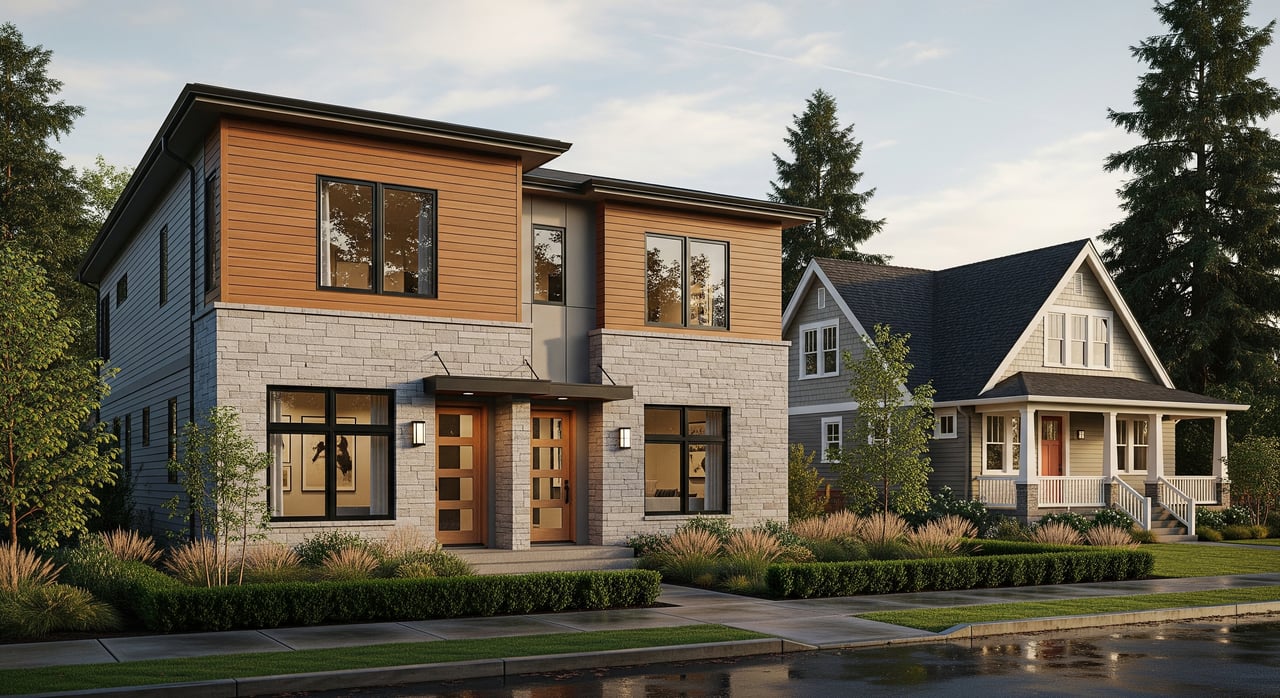
Trying to pick between a townhome and a house for your first place in Hillsboro? You are not alone. Entry price, HOA rules, yard work, and commute all pull in different directions. In this guide, you will compare real costs, maintenance, inspections, and neighborhood fit so you can choose with confidence. Let’s dive in.
Hillsboro at a glance for first-time buyers
Hillsboro’s housing demand is shaped by major employers like Intel and the wider Silicon Forest job market. Areas near the MAX Blue Line and walkable spots such as Orenco Station often attract buyers who value easy transit and local amenities. Attached housing usually offers a lower entry price than detached homes in the same neighborhood, while single-family homes command a premium for land, privacy, and yard space. HOA communities are common in attached housing and many newer subdivisions, so factor dues into your monthly budget.
Townhome or house: what you own
Condominium basics
With a condo, you own the interior of your unit plus a share of the common areas. The HOA typically maintains exteriors, the roof, and shared systems, while you handle the interior. This structure can reduce exterior maintenance for you, but it adds HOA dues and rules.
Townhome basics in Hillsboro
Townhome refers to the style: vertical living with shared walls. Ownership can be under condominium law or as a fee-simple lot in a planned development. Always confirm with the deed and CC&Rs who maintains the roof, siding, and yard, because responsibilities vary by community.
Detached house basics
A single-family detached house is fee-simple ownership of the home and the lot. You control the property and most changes, subject to local codes and any HOA rules if the subdivision has one. You are responsible for all maintenance, from the roof to the fence.
Cost comparison: upfront and monthly
- Purchase price: Attached units generally offer a lower entry price than detached homes in the same submarket.
- HOA dues: Condos and many townhomes include monthly HOA fees that cover shared items. Lenders count these dues in your debt-to-income ratio, which can reduce the amount you qualify to borrow.
- Utilities and upkeep: Detached homes often have higher utility and maintenance costs due to larger spaces and yard care, but they avoid recurring HOA dues unless the neighborhood has one.
- Assessments and reserves: HOAs may require reserve contributions or special assessments. Review the budget and reserves to understand risk.
- Property taxes: Oregon’s Measure 50 limits assessed value growth, but rates vary by district. Always verify the current tax bill for a specific property.
Lifestyle and location tradeoffs
Detached homes deliver more private outdoor space and no shared walls, which can suit buyers who want a yard, garden, or more separation. Townhomes and condos usually offer less yard work, and many are close to transit, retail, and restaurants. In Hillsboro, transit-friendly areas like Orenco Station and spots along the MAX Blue Line can be attractive if you prize a shorter commute or walkability.
Neighborhoods vary. Orenco Station has a higher share of attached housing with walkable amenities. Downtown and near-downtown mix older single-family homes with infill attached units. Southwest and northern Hillsboro feature more single-family subdivisions. Proximity to employers, transit, and school district boundaries can influence desirability and resale.
Financing and insurance basics
Single-family home financing is generally straightforward. Condos can have extra lender requirements, especially for FHA or VA loans, and project approval status matters. HOA financial health and rules like rental caps or pet policies can affect mortgage eligibility.
Insurance differs by type. Condos typically use an HO-6 policy for the interior while the HOA’s master policy covers common elements. Detached homes use a standard homeowner policy. For townhomes, verify whether the HOA master policy covers the roof and exterior or if you need expanded coverage.
Inspections: what to expect in Hillsboro
Structure and moisture
Minor settling cracks are common, but active movement or visible rot deserves deeper evaluation. Oregon’s wet climate can introduce crawlspace moisture, musty odors, or wood decay if ventilation and drainage are poor. If the inspector flags structural movement or elevated moisture, plan for further evaluation and possible remediation.
Roofs and drainage
Inspectors often find aging shingles, moss growth, and clogged gutters. Poor drainage near the foundation can lead to moisture problems. Ask for roof age and any warranties, and ensure downspouts move water away from the house.
Systems: HVAC, electrical, plumbing, and sewer
Older furnaces or AC systems may be near replacement and less efficient. Unstrapped water heaters are a regional safety concern. Older electrical panels or ungrounded outlets can pose risks. For older homes, a sewer-scope camera inspection is wise to check for root intrusion or failing lines.
Attached-unit roofs and HOA reserves
Flat or low-slope roofs on attached buildings can show membrane wear or ponding and can be costly to replace. Confirm whether the HOA or unit owner is responsible for roof work and whether reserves are adequate for upcoming replacement.
Pests and safety items
Inspectors may note signs of termites, carpenter ants, or rodents. Plan for treatment if needed. Budget for repairs to any damaged wood and confirm water heater strapping for safety and insurance.
Turn the inspection into a budget
Use a simple system to turn findings into numbers you can plan around:
- Separate required fixes for safety and code from routine maintenance and cosmetic projects.
- Get at least one licensed contractor estimate for required items so you can negotiate repairs or credits.
- Add a contingency reserve for unknowns, such as 10 to 20 percent of planned repairs. HOA coverage can lower or shift this risk.
- Include ongoing costs: HOA dues, yard care, utilities, and replacement timelines for big-ticket items like roof and HVAC over 5 to 10 years.
Keep lender requirements in mind. Some visible health and safety issues may need to be resolved before closing. If you plan to remodel, factor in Hillsboro permitting timelines and inspections. For attached housing, confirm any HOA architectural approvals needed for exterior or visible changes.
A quick decision framework
Start by ranking your priorities:
- Maximum budget and monthly affordability, including taxes, insurance, and HOA dues
- Preference for low maintenance versus control to renovate and customize
- Need for outdoor space, garage, or storage
- Privacy level and noise tolerance
- Commute: proximity to Intel, MAX stations, or major highways
- School district considerations and walkability
- Future plans: how long you plan to stay and your resale horizon
If you value lower maintenance and transit access, a condo or townhome near Orenco Station, downtown, or along the MAX lines can be a strong fit. Review HOA documents and confirm mortgage eligibility for the project. If you want a yard, more privacy, and broad resale appeal, a detached home in established or newer subdivisions may fit better. If you want a middle ground, consider a townhome with a small yard or a fee-simple rowhouse and confirm maintenance boundaries.
Watch for red flags. Low HOA reserves, repeated special assessments, pending litigation, or a lack of loan approvals for condo projects can add risk. On inspections, active structural issues or major sewer problems deserve careful evaluation and a clear plan before you proceed.
What to request and verify
- Seller’s property disclosure
- HOA documents: CC&Rs, bylaws, rules, current budget, reserve study, insurance declarations, and meeting minutes from the last 12 to 24 months
- Permit history for additions or remodeling
- Utility bills for 12 months if available
Recommended inspections and add-ons:
- Full home inspection covering structure, electrical, plumbing, and HVAC
- Sewer-scope camera for older homes or where slow drains are noted
- Roof inspection if condition or age is unclear
- Pest inspection if there is evidence or the home is older
- Moisture or mold evaluation if elevated moisture is found
- Radon testing if you are concerned
Helpful local sources include the City of Hillsboro Planning and Building Division for permits, the Washington County Assessor for tax history, local floodplain resources, the Hillsboro School District for boundary information, the Oregon Real Estate Agency for regulations, and your HOA management company for community details.
Ready to compare options?
You deserve a clear plan that fits your budget, commute, and lifestyle. If you want construction-informed advice that turns inspections and HOA documents into real numbers and timelines, let’s talk. Connect with me at Josh Halemeier - Main Site to schedule a free consultation.
FAQs
What are the main cost differences between a Hillsboro townhome and a detached house?
- Attached units often have a lower entry price but add HOA dues, while detached homes avoid recurring HOA fees yet usually carry higher utility and maintenance costs.
How do HOA dues affect my mortgage approval in Hillsboro?
- Lenders include HOA dues in your debt-to-income calculations, which can reduce your maximum loan amount and affect affordability.
Which Hillsboro areas suit buyers who want transit access and low maintenance?
- Orenco Station, downtown, and neighborhoods near the MAX Blue Line often offer attached housing with walkable amenities and easier transit options.
What inspection items matter most in older Hillsboro homes?
- Focus on structure and moisture, roof condition and drainage, electrical safety, HVAC age, plumbing materials, and a sewer-scope to check for root intrusion or failing lines.
How does Oregon’s Measure 50 impact my property taxes?
- Measure 50 limits assessed value growth, but tax rates vary by district, so you should verify the current tax bill for any property you are considering.
What HOA documents should I review before buying a condo or townhome?
- Review CC&Rs, bylaws, rules, budget, reserve study, insurance details, recent meeting minutes, and any statements about assessments, rental caps, or pending litigation.